





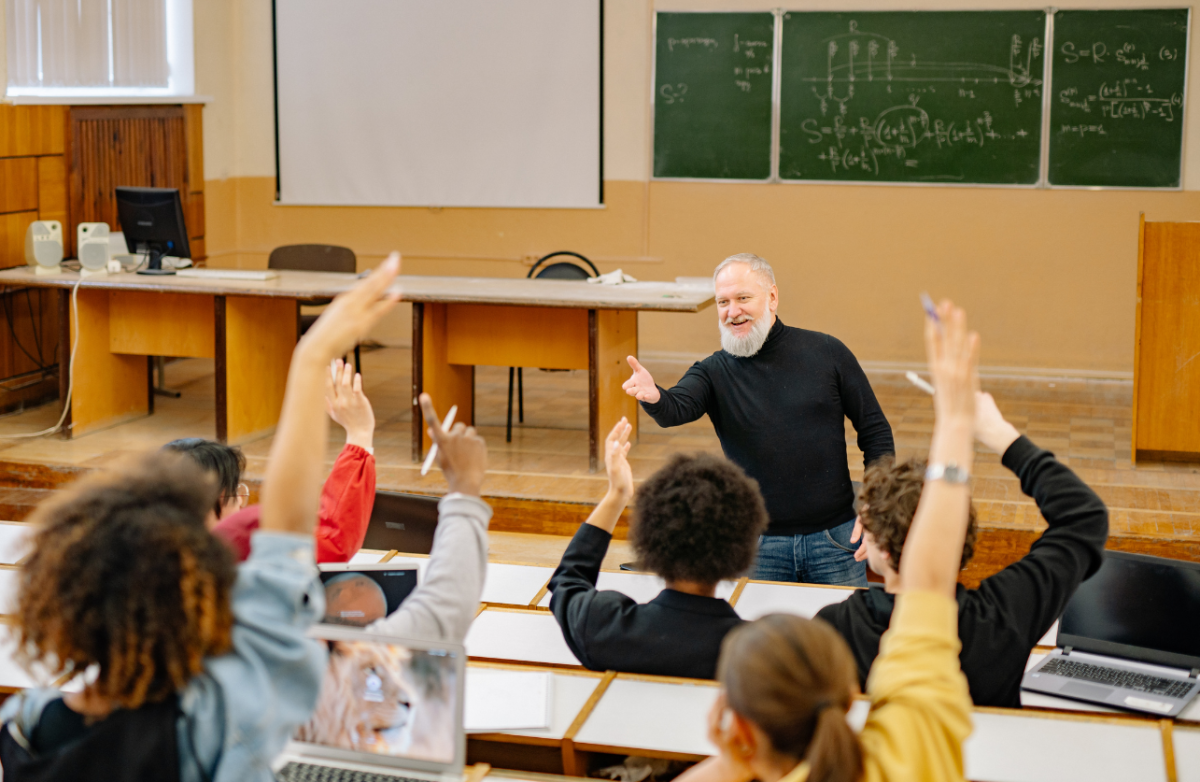











We’ve all taken our fair share of core curricular classes; however, has anyone noticed that many of these classes fail to capture real-world applicable knowledge necessary for future lifestyles? From a personal perspective, I think it’s important to engage students in team-building exercises and a more structured learning style that prepares them for the challenges of life.
What classes are required for graduation? Academy District 20 requires students to earn 50 credits in mathematics, English, science and social Studies for graduation. None of those involve personal finance, accounting, economics, business and marketing or the CTE electives, all of which are crucial for student understanding of life skills.
My take is that some of these classes should be required for graduation, that way students can be knowledgeable on taxes, how to change a tire, the basics of cooking and the general aspects of life everyone should know. At the very least, the required classes for graduation should incorporate real-world skills.
That’s not to say I haven’t noticed these connections. In geometry last year, I was put in a group and given the task of figuring out how tall a tree was by just measuring the length of the shadow. The activity was more than just a math problem; it was to introduce real-life skills. The group was required to take calculated measurements and use math to find (x) and get the height of the tree. I believe if we’re going to make these courses the root of high school, we should incorporate general knowledge, like the activity, which can later be used in home building projects and careers.
English should include more modern literature, science should focus on more hands-on work, including dissections and lab experiments, and History should have appropriate reenactments of times in history that help the student connect the dots. It doesn’t have to be an issue with the subject itself; the course may just need to be restructured for student understanding.
Furthermore, schools actually used to teach home economics, which included skills for basic American lives on cooking, raising a family and managing a house and income. However, most districts across the country removed the course due to budget cuts, and a focus on college prep over life skills.
A PBS.org article reflected on how home economics lessons used to be included and why they were removed. An experiment was conducted where modern-day students were put back into the same situations as prior generations. The article applied these concepts by demonstrating, “Klair Jordan, then a 9th-grade student, was playing the role of a single mother with four kids. Another classmate took on the perspective of a married stay-at-home mom.”
As shown in the article, I believe students of the upcoming generations could benefit from a course like this. I think it would be interesting to see how Gen Z, compared to Gen X, would handle real-life tasks, considering there’s been so much change with social media and technology.
As further stated in the article, “We went and bought a house. We had to pay taxes, buy a car, and everything.” Old concepts need to be embraced and brought back into modern-day education.